My Life as a Digital Nomad in Phnom Penh, Cambodia
Thinking about making the move to Phnom Penh as a digital nomad but not sure where to start? I get it, I’ve been there.
My name is Jeff, and on my blog, I go by “Jeff the chilled nomad.” As a full-time traveler and freelance copywriter, I’ve learned a thing or two about what makes a city great for remote work. After spending a good chunk of time in Cambodia’s wild and wonderful capital, I decided to put together the guide I wish I’d had.
A comfortable life here can cost as little as $1,000 USD a month. It’s a city of incredible contrasts, from humbling history to buzzing, modern creative hubs.
I’m going to walk you through everything you need to know, from finding a great apartment to the best visa to get. Let’s get into it.
Key Takeaways
- It’s Seriously Affordable: Your money goes a long way here. A monthly budget of around $1,000 to $1,200 USD allows for a very comfortable lifestyle in Phnom Penh.
- Great Hubs for Work: You’ll find plenty of modern co-working spaces and cafes with reliable Wi-Fi, perfect for getting work done and meeting other nomads.
- Getting Around is Easy: Transportation is cheap and simple, thanks to ride-hailing apps like Grab and PassApp that offer tuk-tuk and car services at fixed prices.
- Good Healthcare is Available: The city has several international-standard hospitals and clinics, like Royal Phnom Penh Hospital, so you can have peace of mind. It’s still a good idea to have solid health insurance.
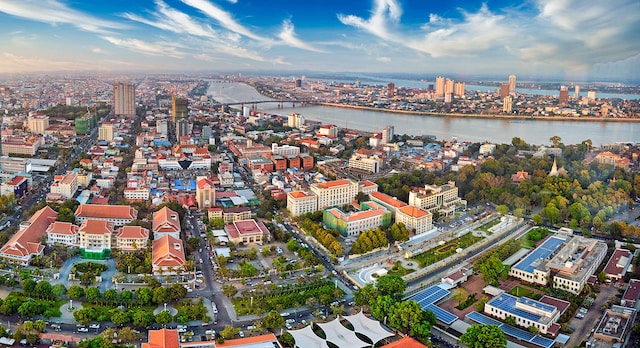
Preah Ang Eng St. (13), Phnom Penh, Cambodia
Cost of Living in Cambodia
As a digital nomad in Phnom Penh, the first thing I noticed was how affordable it is. Your lifestyle plays a big part, but a monthly budget of around $1,150 USD for 2025 is a realistic target for a comfortable setup. For context, a single person’s expenses without rent are estimated to be around $600 a month.
Here’s a quick look at what my typical monthly costs looked like, based on my experience and current 2025 data from Numbeo:
| Expense Category | Estimated Monthly Cost (USD) |
|---|---|
| Rent for a Modern 1-Bedroom Apartment | $300 – $500 |
| Utilities (Electricity, Water, Garbage) | $70 – $100 |
| Internet (Fiber Optic, 50+ Mbps) | $20 – $35 |
| Groceries (Shopping at places like Lucky Supermarket) | $250 – $300 |
| Transportation (Primarily PassApp/Grab) | $40 – $60 |
| Health Insurance (Essential for peace of mind) | $40 – $100 |
| Entertainment & Dining Out | $150 – $250 |
My biggest surprise was my first electricity bill! Air conditioning is a lifesaver here, but it can quickly become your biggest utility expense, sometimes hitting $80-$100 a month if you run it constantly. You learn to use it wisely.
Accommodation Options for Digital Nomads – stay in Phnom Penh
Finding a great place to live in Phnom Penh is surprisingly easy. The city has a fantastic range of accommodation options that fit any budget or style.
When I first arrived, I learned you have to choose your neighborhood wisely. Each one has a totally different vibe.
Top Neighborhoods for Nomads
- BKK1 (Boeung Keng Kang 1): This is the classic expat hub. It’s filled with modern condos, international restaurants, and trendy cafes. It’s super convenient but also one of the pricier areas, with one-bedroom places often starting around $500.
- Toul Tom Poung (Russian Market): This was my favorite spot. It has a more local, authentic feel while still offering plenty of Western comforts. It’s a bit more laid-back, and you can find great apartments for $350-$450.
- Tonle Bassac: This area is becoming really popular with a younger crowd. It’s home to the huge AEON Mall and Bassac Lane, a famous alley packed with cool, tiny bars.
Types of Housing
You can find everything from serviced apartments with pools and gyms to more traditional Khmer-style houses. For long-term stays, I found the best deals on Facebook groups like “Phnom Penh Housing.”
A pro-tip I learned quickly: most landlords require one month’s rent upfront plus a security deposit equivalent to two months’ rent. This is standard, so be prepared for it when you find a place you love.
Transportation in Phnom Penh
Getting around Phnom Penh is an adventure in itself, but it’s incredibly easy once you know the secret. Forget negotiating with drivers on the street; it’s all about the apps.
The two ride-hailing apps you absolutely need are:
- PassApp: This is the local favorite and often the cheapest option. It’s my go-to for daily trips.
- Grab: The big Southeast Asian player. It’s slightly more expensive but offers more vehicle options and is widely available.
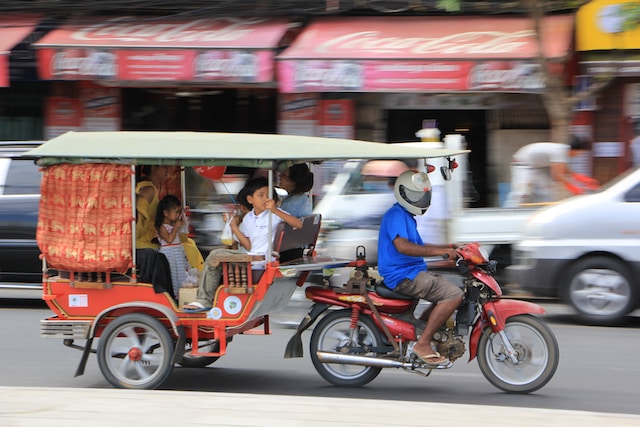
A typical 10-15 minute ride in a tuk-tuk booked through one of these apps usually costs just $1 to $3. Using the apps means you get a fixed, fair price upfront, which saved me a lot of hassle compared to my early days of trying to bargain on the street.
While there aren’t metros or trams, the fleet of tuk-tuks and cars available on these apps makes getting anywhere in the city incredibly simple and affordable.
Healthcare Facilities and services
One of my biggest concerns before moving here was healthcare. I was relieved to find that Phnom Penh has some excellent and reliable options.
The city has a number of high-quality private hospitals and clinics that cater to expats. The staff often includes international doctors, and English is widely spoken. My friends and I have had good experiences with a few key facilities.
Recommended Hospitals and Clinics
- Royal Phnom Penh Hospital: This is part of the well-regarded Bangkok Hospital Group and is considered one of the best in the country, with modern facilities and specialists from around the world.
- Raffles Medical Phnom Penh: A Singaporean-managed clinic that’s a trusted name among expats for general consultations and specialist care.
- Sen Sok International University Hospital: Another solid option that many expats use, offering international standards at a slightly more affordable price point than Royal.
A routine check-up at one of these facilities is generally affordable, but for anything serious, costs can add up. That’s why having good travel or expat health insurance is non-negotiable. I use SafetyWing, but there are many great options out there. You can find pharmacies on almost every corner for basic medications, which is super convenient.
Weather and Best Time to Visit Phnom Penh – weather in Cambodia
Let’s talk about the weather in Phnom Penh, because it’s a big part of daily life. It’s hot year-round, with daytime temperatures often climbing toward 40°C (104°F). There are really only two seasons that matter: dry and wet.
The dry season runs from about October to April, and this is easily the best time to be here. I particularly love the stretch from November to February, when the humidity drops and the weather is sunny and genuinely pleasant.
The wet season goes from May to September. Now, that might sound bad, but I actually enjoyed it. It doesn’t rain all day. Instead, you get a powerful, intense downpour for about an hour in the afternoon, and then the sun comes out again. It makes everything incredibly green and lush.
My favorite wet-season activity was finding a cozy spot in a cafe, like the popular local chain Brown Coffee, ordering an iced latte, and just watching the storm roll through. It’s a perfect excuse for a productive work session.
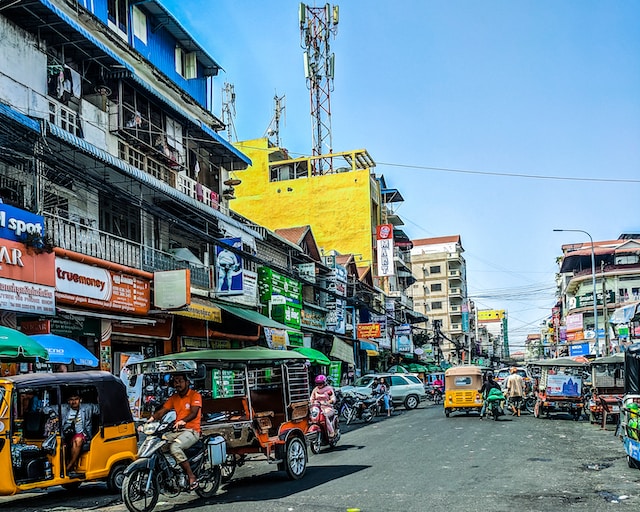
Phnom Penh, Cambodia
Visa Requirements and Documentation
Okay, let’s get into the most important part: the visa. Thankfully, Cambodia is one of the easiest countries in Southeast Asia for digital nomads to stay long-term. While there isn’t an official “digital nomad visa” for 2025, the existing system works perfectly.
Here’s the process I followed and recommend:
- Get an E-Class Visa on Arrival: When you fly into the airport, don’t get the Tourist (T-Type) visa. Ask for the Ordinary Visa, also known as an E-Class visa. It costs around $35 and is valid for 30 days. This is the key to long-term stays.
- Extend Your E-Class Visa: The E-Class visa is the only one that can be extended for long periods. You can get extensions for 1, 3, 6, or 12 months. Most nomads go for the 6 or 12-month EB (Business) extension.
- Use a Visa Agent: Don’t try to do the extension yourself. There are countless travel agents and visa services in Phnom Penh who will handle all the paperwork for a small fee. It’s the standard way of doing things and completely stress-free.
- E-Visa Option: You can also apply for an e-Visa online before you arrive through the official government portal. Just make sure it’s the E-Class Ordinary Visa if you plan to stay longer than a month or two.
The best part is that you can get a long-term visa that allows you to live and work remotely for your foreign clients without much hassle, which is a huge advantage over some neighboring countries.
co-working spaces in cambodia
As a digital nomad, a good workspace is everything. Phnom Penh’s scene has exploded in recent years, with amazing options for every work style. The internet here is surprisingly good, with many places offering high-speed fiber connections from providers like Ezecom or Sinet.
You can choose between dedicated coworking spaces or just posting up at one of the city’s many fantastic cafes.
My Favorite Coworking Spots
- Impact Hub Phnom Penh: This place has a great community vibe with lots of events and networking opportunities. A hot desk for a day costs around $10, with monthly options available.
- Workspace 1 at The Factory: Located in a huge, converted industrial space, this place is amazing for creatives. It has an industrial-chic design and a super dynamic atmosphere.
- The Desk: A really energetic and modern space that attracts a mix of freelancers and small businesses.
Top Cafes for Working
Sometimes I just prefer the buzz of a cafe. My personal favorite is Suzie Time Café, where you can pay about $6 for a full day pass that includes unlimited coffee and drinks, a model I wish more places would adopt! The local chain Brown Coffee is also a solid bet, with locations all over the city and consistently good Wi-Fi.
Top Attractions and Activities in Phnom Penh
Phnom Penh is a city with a deep, and at times heavy, history, but it’s also full of life and incredible energy. There’s so much to do once you close your laptop for the day.
- Visit the Royal Palace: You can’t miss the glittering roofs of the Royal Palace. The architecture is stunning, and the Silver Pagoda inside is incredible.
- Confront History at Tuol Sleng Genocide Museum: It’s an intense and somber experience, but I believe it’s essential for understanding Cambodia’s recent past. It’s a former school that was turned into the S-21 prison by the Khmer Rouge.
- Walk Along the Riverside: The Sisowath Quay is perfect for a sunset stroll. It’s lined with cafes and restaurants and is always buzzing with activity. My favorite thing to do is grab a drink at a rooftop bar like the legendary Foreign Correspondents’ Club (FCC) and watch the boats on the Mekong.
- Get Lost in the Markets: The Art Deco Central Market (Phsar Thom Thmei) is an architectural wonder and great for finding almost anything. For a more gritty, local experience, the Russian Market (Psar Tuol Tom Poung) is fantastic for souvenirs and street food.
- Climb Wat Phnom: This is the temple that gives the city its name. It’s a peaceful green space right in the middle of the city’s chaos.
- Escape to Koh Dach (Silk Island): Just a short ferry ride away, this island feels like a different world. It’s a peaceful escape where you can see traditional silk weaving and bike through quiet villages.
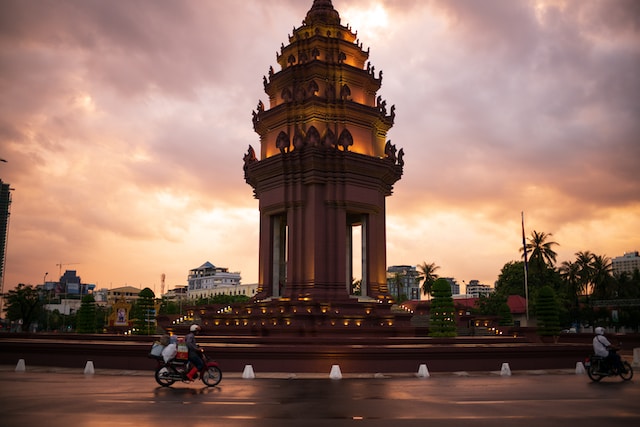
Royal Palace, Phnom Penh, Cambodia
Food, Drinks, and Nightlife in Phnom Penh
The food and nightlife scene in Phnom Penh is absolutely fantastic and was one of my favorite parts of living there. The city has everything from $2 street food meals to high-end dining.
For authentic Khmer food, a must-try dish is Fish Amok, a fragrant fish curry steamed in a banana leaf. Restaurants like Malis offer a beautiful fine-dining version, while you can find amazing local versions at countless spots in the Russian Market area.
Where to Go Out
When the sun goes down, the city really comes alive.
- Bassac Lane: This is the heart of the trendy nightlife scene. It’s a narrow alley packed with small, stylish bars, each with its own unique personality. It’s the perfect place to bar-hop.
- Rooftop Bars: Phnom Penh does rooftop bars incredibly well. For a truly spectacular view, head to Sora Skybar at the top of the Vattanac Capital Tower. The drinks are pricey, but the 360-degree view is worth it.
- Street 308: This is another great street in the BKK1 area known for its cluster of cool bars and restaurants, with places like Piccolo Italia Da Luigi serving up some of the best pizza in town.
Whether I was in the mood for a quiet craft beer or a lively night out, I always found a great spot.
Conclusion
So, is Phnom Penh a great destination for digital nomads? Absolutely.
For me, it struck the perfect balance. The cost of living is low, the visa situation is refreshingly simple, and there are more than enough coworking spaces and cafes to stay productive.
Beyond the practicalities, it’s a city with a real heart and soul. It’s chaotic, exciting, and full of some of the friendliest people I’ve ever met.
If you’re looking for an affordable and vibrant base to work and explore from in Southeast Asia, I can’t recommend Phnom Penh enough.
FAQs
1. Is Phnom Penh, Cambodia a suitable city for digital nomads?
Yes, Phnom Penh is a great city for digital nomads. It combines a low cost of living, excellent internet connectivity in cafes and coworking spaces, and a welcoming expat community.
2. What are some popular co-working spaces in Phnom Penh?
Some of the most popular co-working spaces include Impact Hub for its community events, Workspace 1 at The Factory for a creative vibe, and The Desk for a modern, energetic environment.
3. Are there any visa requirements for digital nomads in Cambodia?
While there’s no specific digital nomad visa, the best option is the E-Class (Ordinary) visa, which you can get on arrival. It can be easily extended for 6 or 12 months, making it ideal for long-term stays.
4. What are some must-visit places and attractions in Phnom Penh?
You should definitely visit the Royal Palace and Silver Pagoda, the Tuol Sleng Genocide Museum, and the Choeung Ek Killing Fields to understand the history. For a more lively experience, explore the Central Market and enjoy the sunset on the Riverside.
Is Cambodia a good place for digital nomads?
Yes, Cambodia is an excellent choice. The affordability is a huge draw, the internet is reliable in major cities, and the straightforward visa situation makes it much less stressful than in some neighboring countries.
What is the cost of living in Cambodia?
The cost of living is very low. A comfortable lifestyle in Phnom Penh can be achieved on a budget of about $900-$1,200 per month, which covers rent, food, transportation, and entertainment.
What are some popular attractions in Cambodia?
Besides the attractions in Phnom Penh, the biggest draw in Cambodia is the ancient temple complex of Angkor Wat in Siem Reap. The coastal towns of Kampot and Kep are also popular for their laid-back vibe, and the islands like Koh Rong offer beautiful beaches.
How is the nightlife in Cambodia?
The nightlife, especially in Phnom Penh and Siem Reap, is vibrant and diverse. You can find everything from trendy rooftop bars and hidden speakeasies in alleys like Bassac Lane to bustling night markets and riverside pubs.
Can foreigners work in Cambodia?
Yes, foreigners can work remotely for companies outside of Cambodia on an E-Class (Ordinary) visa with a business extension (EB). This is the path most digital nomads take and it’s a well-established process.
Is Phnom Penh safe?
Phnom Penh is generally safe, but like any big city, it’s smart to take precautions. Here are a few tips I live by:
- Be aware of your surroundings. Keep an eye on your belongings, especially in crowded markets, and don’t flash expensive items.
- Avoid walking alone late at night in poorly lit areas. Sticking to main roads is always a good idea.
- Be cautious with strangers offering things that seem too good to be true.
- Never accept drinks from strangers.
- Use ride-hailing apps like Grab or PassApp instead of hailing random tuk-tuks off the street. This ensures a fixed price and a registered driver.
- Be mindful of the traffic. It can be chaotic, so always look carefully before crossing the street.
By following these common-sense tips, you can enjoy your time in Phnom Penh safely.
If you ever have an emergency, the tourist police can be reached by dialing 117, and an ambulance is 115.
how to get from phnom penh to siem reap
Traveling from Phnom Penh to Siem Reap is a common route with several good options:
1. Flights: The fastest way is to fly. Airlines like Cambodia Angkor Air operate daily flights, which take about 45 minutes. It’s more expensive but saves a lot of time.
2. Bus: This is the most popular and budget-friendly choice. Companies like Giant Ibis and Mekong Express run comfortable, air-conditioned buses throughout the day. The journey takes about 5-6 hours and is a great way to see the countryside.
3. Private Car or Taxi: For more comfort and flexibility, you can hire a private car. This allows you to stop whenever you like along the way. The trip takes around 5-6 hours and can be arranged through your hotel or a local travel agency.
4. Shared Minivan: A good middle-ground option, shared minivans are faster than buses but cheaper than a private taxi. They are a popular choice for both locals and travelers.
how to pronounce phnom penh
This was one of the first things I had to learn! The “Ph” at the beginning is pronounced like a hard “P,” not an “F.”
So, it’s pronounced: “P-nom Pen.”
The first word, “Phnom,” sounds like “nom” with a silent “p” at the beginning.